Architecture review
An outside read of a system you already run.
Freelance software architect · Stuttgart, Germany
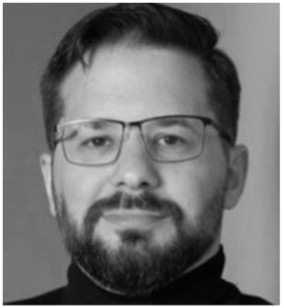
I am Daniel Hartmann. For twenty-five years I have been deciding where the boundaries in a system go and then writing the code on both sides of them — in public-sector platforms, SaaS products, and a multi-tenant booking platform I architect and operate myself. That last one is built day to day with AI coding agents, inside boundaries they cannot quietly cross — and it is in production.
Contract work is the default. The right permanent role — product ownership, a small senior team — is worth a conversation too: say which one you have.
Availability
Services
Each one has a shape, a duration and something written down at the end of it. Day rate on request; the first call costs nothing and sometimes ends with me saying no.
An outside read of a system you already run.
Coding agents in a real codebase, with the guardrails that make it safe.
The shape decided before the team starts moving fast inside it.
Building it, not just diagramming it.
Selected work
School IT staff in three federal states work in one interface instead of five vendor consoles, and no ticket is lost when the ticketing system is down.
Two architectural bets paid out in public: the payment providers (Stripe Connect and PayPal) were removed wholesale without touching settlement semantics, and four APIs moved from Elysia to Hono in a week with the domain packages untouched.
Architecture and development of the backend for an AI-powered workflow automation platform.
Current practice
Reynt is a production multi-tenant booking SaaS — thirteen packages, four APIs, three frontends — that I architected, wrote and operate myself, most of it with AI coding agents doing the typing. That is only defensible because of what sits underneath them: fitness functions that fail the build when a boundary is crossed, invariants placed where nothing can route around them, and integration tests against a real database in CI.
The agent is the cheap part. The guardrails are what I would actually be bringing to your codebase, and they are written down and checkable rather than asserted.
Reynt, by the parts that matter
In the open
Extracted from work that shipped, not written to be extracted. Documented, tested, and honest about their limits — the same code review you would get on your own codebase, except this one is public.
Library · TypeScript
Durable workflows on the Postgres you already have.
Declare a DAG of Zod-typed steps. The engine runs each step as soon as its dependencies complete, persists every transition, retries failures, and picks up where it left off after a restart.
MITPre-1.0 · actively developed
Monorepo · TypeScript
The building blocks underneath everything else.
Two packages extracted from real products: an opinionated server framework toolkit and a Nuxt/Vue kit for admin SPAs. Everything heavy is an optional peer — you install only what you import.
MITPre-1.0 · published to npm
Kubernetes webhook · Go
Wildcard certificates for Porkbun domains on Kubernetes.
A cert-manager ACME DNS-01 solver for domains hosted at Porkbun, which cert-manager has no built-in solver for. A maintained fork of an abandoned upstream — rewritten, hardened, and tested.
Apache-2.0Released · maintained
Approach
Each one names an established pattern, points at the shipped code that would break if I stopped doing it, and says what it costs. None of them belong to a language — the same decisions were made in C#, Kotlin, Rust and Go long before the TypeScript ones.
The shape of the code
How the rules survive
Where it meets the world
What gets written down
Writing
A paragraph about what you are building is enough to start. Mail is the fastest way through, and the reply comes from the person who would do the work.
Available now — up to full-time, remote across the EU, or on site around Stuttgart. Day rate on request.